
Some places in Ireland are beautiful. Others are merely old. And then there are places like Newgrange and the Hill of Tara that are something else entirely, ancient in a way that makes the word feel inadequate, loaded with meaning that scholars are still working to unravel five thousand years after the people who built them were gone. If you are planning a visit to Ireland and have any interest in Celtic heritage, Neolithic history, or the kind of experience that genuinely stops you in your tracks, a private Boyne Valley tour from Dublin is one of the most rewarding days you can spend on this island.
At Planet Dublin Tours, our all inclusive Newgrange and Hill of Tara private day tour is nine hours of exactly that kind of immersion, and in this guide, we are going to tell you everything you need to know about both sites before you go. Read on to understand why this particular corner of Ireland’s Ancient East has been drawing visitors, and pilgrims, and kings, and scholars, for millennia.
Ireland’s Ancient East is the name Fáilte Ireland uses for the eastern and south-eastern counties of the island, but the heritage it encompasses is far older than any tourism campaign. This is the part of Ireland where the earliest complex human settlement occurred, where the first great monuments were raised, where Christian monasticism flourished during the dark centuries following the fall of Rome, and where Norman invaders eventually made their deepest marks. Within a relatively compact area stretching from County Meath southward through Louth, Meath, Westmeath and beyond, the density of historically significant sites is extraordinary even by Irish standards.
Newgrange and the Hill of Tara represent two of the most important sites in this heritage landscape, and they sit within comfortable reach of each other and of Dublin, which is what makes a combined private day tour so satisfying. You can leave your Dublin hotel in the morning with modern streets around you and be standing inside a chamber that was built before Stonehenge. That 1 hour drive is part of what makes Ireland’s Ancient East so compelling for heritage travellers.
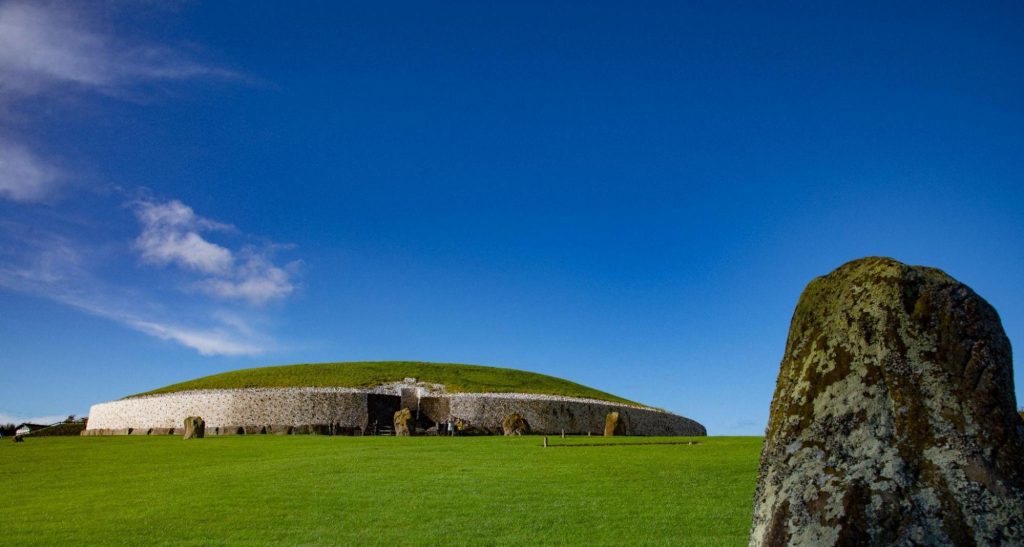
Newgrange is one of the most extraordinary man-made structures on earth. It is a passage tomb situated on a low ridge above the River Boyne in County Meath, constructed approximately 5,200 years ago during the Neolithic period. To put that in perspective: Newgrange was already ancient when the first stones of Stonehenge were being moved into position. It predates the Pyramids of Giza by around five centuries. The people who built it were farming communities living in Neolithic Ireland, working without metal tools, without the wheel, and without any form of written record.
What they built is staggering. The mound itself is roughly 76 metres in diameter and approximately 13 metres high, constructed from alternating layers of peat and stones, held in place by a retaining kerb of large decorated kerbstones that runs around the entire base. The exterior facing is a striking white quartz wall that was reconstructed from material found at the site during excavations in the 1960s and 1970s. The overall impression, sitting on its ridge above the surrounding farmland, is monumental in the most literal sense.
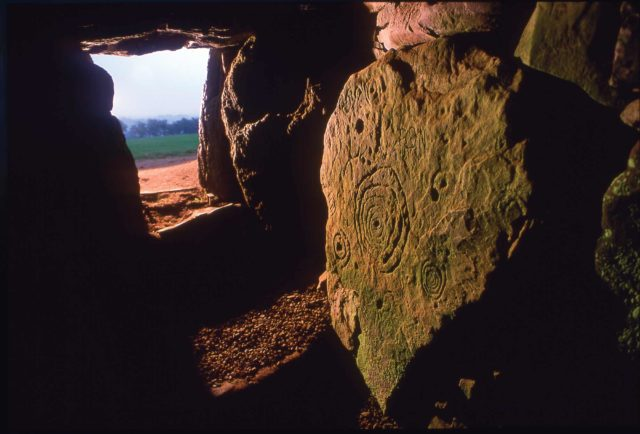
The interior is accessed through a narrow passage approximately 19 metres long, lined with large upright stones, many of which are decorated with spiral carvings. At the end of the passage is the cruciform chamber, a roughly cross-shaped space with a corbelled roof that has remained completely watertight for over five thousand years. The construction of this roof, using overlapping horizontal stones stepped progressively inward, represents a level of architectural sophistication that continues to impress structural engineers who study it today.
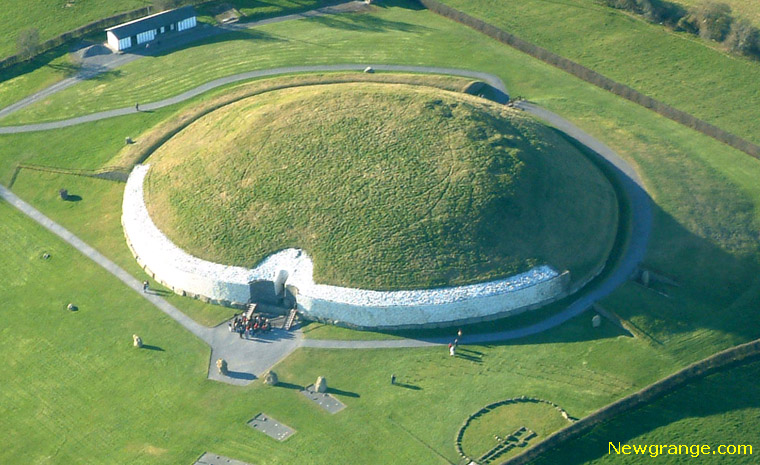
What makes Newgrange uniquely famous among the world’s Neolithic monuments, however, is what happens inside the chamber on the winter solstice. Above the entrance to the passage, a narrow roof box, a deliberately constructed opening, is positioned with extraordinary precision so that on the mornings around the 21st of December, the rising sun sends a shaft of light directly along the full length of the passage and into the chamber. For approximately seventeen minutes, the chamber floor is illuminated. The rest of the year it is in darkness. This alignment is not accidental. It required sustained astronomical observation over many years, precise planning, and extraordinary construction skill. Its meaning is debated: was it a ritual reanimation of the dead, a symbolic rebirth of the sun, a calendar marker? We do not know for certain. But the precision of the alignment, maintained across more than five thousand years, is humbling.
Newgrange is part of the Brú na Bóinne UNESCO World Heritage Site, which also includes the nearby passage tombs of Knowth and Dowth. Access to the interior of the mound is managed through the Brú na Bóinne Visitor Centre on the south bank of the Boyne, and your Planet Dublin Tours guide will manage all the logistics of your visit, ensuring you make the most of your time at the site.
One of the things that strikes visitors who have only seen Newgrange in photographs is how beautiful the surrounding landscape is. The River Boyne curves through this part of Meath in a great sweep, and the low ridge on which the monument sits overlooks water meadows and ancient farmland that feel genuinely timeless. This is a valley that has been farmed and settled continuously for at least six thousand years, and that continuity gives the landscape a particular quality of depth.
The Boyne Valley is also, of course, the site of the Battle of the Boyne in 1690, where the forces of William of Orange defeated the Jacobite army of King James II in a confrontation that shaped Irish and British history for the following three centuries. The monuments of Neolithic Ireland and the battlefield of seventeenth-century religious conflict sit within kilometres of each other in this landscape, which is in some ways a perfect summary of what Ireland’s Ancient East contains: layers upon layers of human history compressed into a relatively small geographical space.
Your guide can contextualise all of this during the journey from Dublin into Meath, so that by the time you arrive at Newgrange, you understand not just what the monument is, but where it sits in the broader sweep of Irish and world history.
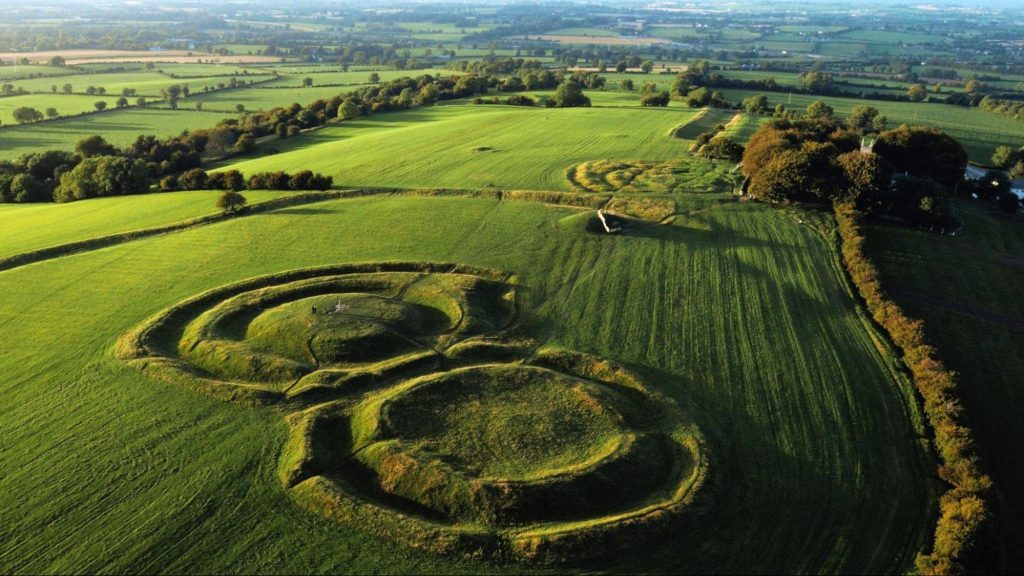
From Newgrange, the tour moves to the Hill of Tara, a low but commanding ridge in County Meath that was for centuries the most symbolically important place in Ireland. From its highest point, you can see across several counties on a clear day, and this panoramic quality was clearly part of its significance: a place from which the land could be surveyed in all directions, where the king stood at the centre of his kingdom.
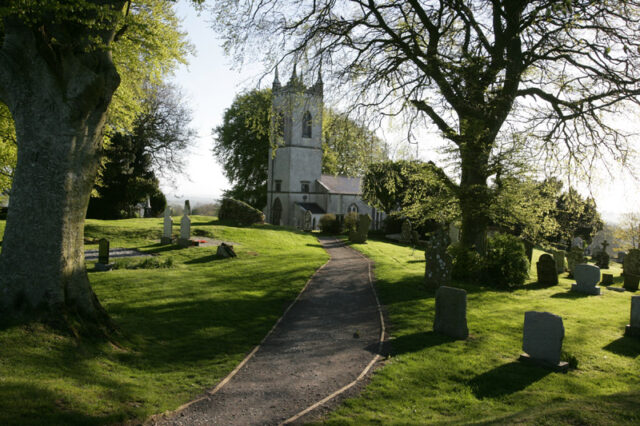
The historical and mythological significance of Tara is layered and complex. In Irish mythology, Tara was the seat of the High Kings of Ireland, the place where sovereignty resided, and where the legendary Feis Temhra, the Feast of Tara, was held to inaugurate new kings. The ritual of inauguration at Tara was associated with a sacred stone called the Lia Fáil, which stands on the hill to this day and which legend holds would cry out when touched by the rightful king of Ireland. The stone you can see there now, a standing stone of uncertain age, may or may not be the original Lia Fáil; scholarship on this is divided, but its presence on the hill has been continuous for as long as records exist.
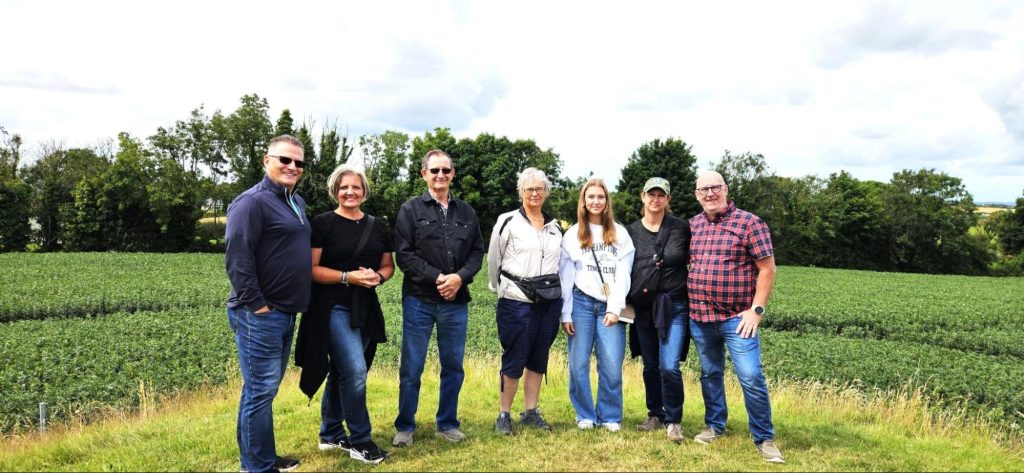
Beyond the legends, Tara is also a remarkable place to explore on foot. As you walk across the hill, you’ll see ancient mounds, banks, ditches and standing stones that hint at how important this site once was. Some features are easy to spot, while others are more subtle, which is why having a knowledgeable guide makes such a difference. Your guide will help you understand what you’re looking at without overwhelming you with technical detail, bringing the history and stories of Tara together in a way that feels clear, engaging and memorable.
The views from the hill are one of its most immediately striking qualities. Standing on a clear day at the Royal Seat, looking out across Meath toward the mountains of the Dublin range to the south and the Cooley Peninsula to the north, it is not difficult to understand why this particular piece of high ground was chosen as a symbolic centre. The landscape around you is not dramatic or spectacular in the way that the west of Ireland is dramatic. Standing there, surrounded by wide skies and rolling green fields, you get a real sense of why this hill mattered so much.
Your Planet Dublin Tours guide will bring the mythology, archaeology and history of Tara to life in the way that only a knowledgeable local guide can, telling you the stories of the High Kings, the mythological significance of the site in the Irish tradition, and the ongoing archaeological work that continues to reveal new dimensions of what Tara was and what happened here.
From the moment we meet you at your Dublin hotel, the day is entirely yours.
Our Newgrange and Hill of Tara private day tour is a nine-hour journey into the heart of Ireland’s Ancient East, unhurried, deeply personal, and led by a registered Fáilte Ireland guide who brings this extraordinary landscape to life with storytelling, history and genuine passion for the places you’ll visit.
With a maximum of seven guests travelling in a luxury air-conditioned vehicle, this is as far from a coach tour as it’s possible to get. There’s no group to keep pace with, no fixed schedule that gets in the way of what’s actually interesting, and no moment where you feel like one of a crowd. Just you, your fellow travellers, and one of the most remarkable corners of the ancient world.
The drive into County Meath is part of the experience from the very start. As Dublin gives way to the rolling fields of the Boyne Valley, your guide will begin to paint the picture, the geography of the river valley, the layers of history that have accumulated here over thousands of years, and what awaits you at the end of the road.
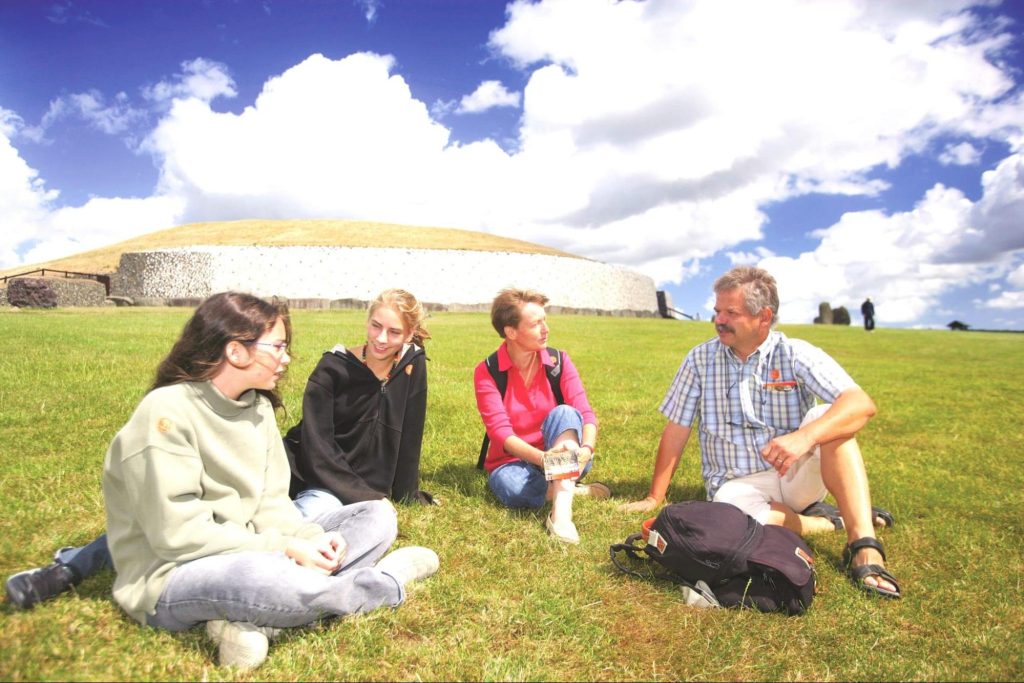
At Brú na Bóinne, your visit to Newgrange is led by an official OPW guide from the Office of Public Works, who has specialist knowledge of the monument and its history. This means you’ll hear the story of Newgrange from the people who know the site best, while your Planet Dublin Tours guide looks after the wider day, including transport, timing, tickets and the journey between each stop. The Hill of Tara follows, with time to walk the hill, take in the monuments, and hear the mythology of a place at the heart of Irish legend and kingship. Lunch is taken at a hand-picked local venue, and the pace throughout the day is relaxed. We’re in no hurry. The best days always unfold that way.
Many of our guests on this tour come from the United States, drawn by a connection to Ireland that runs deeper than simple curiosity. For visitors with Irish heritage, the Boyne Valley and the Hill of Tara carry a resonance that is hard to put into words and even harder to fully anticipate until you’re standing there.
The legends of the High Kings, the Lia Fáil, the great mythological figures of Cú Chulainn and Fionn Mac Cumhaill, these are stories woven into the fabric of Irish-American identity, passed down through generations long before many families ever had the chance to return to Ireland. Standing on the Hill of Tara for the first time, with a guide who knows these stories in their full depth and complexity, is for many of our guests one of the most genuinely emotional experiences of their lives.
If you have Irish roots and Ireland is on your horizon, the Boyne Valley deserves a place at the very top of your itinerary. It may not be as widely visited as the Wild Atlantic Way or the landscapes of the west but it is arguably the most historically significant ground on the island, and it contains monuments that belong not just to Ireland but to the prehistory of human civilisation itself. Come and stand in that place. We’ll make sure you understand exactly what you’re looking at.
Our tour can be booked directly through Planet Dublin Tours at planetdublintours.ie. Contact the team to confirm availability and arrange a departure time that suits your Dublin itinerary.
There are days of travel that are enjoyable and days that are genuinely unforgettable. A well-guided private tour to Newgrange and the Hill of Tara belongs firmly in the second category. By the time you are heading back toward Dublin in the evening, with the Boyne Valley behind you and a day’s worth of five-thousand-year-old history to process, you will understand Ireland in a way that no amount of time in the city could have given you.
